


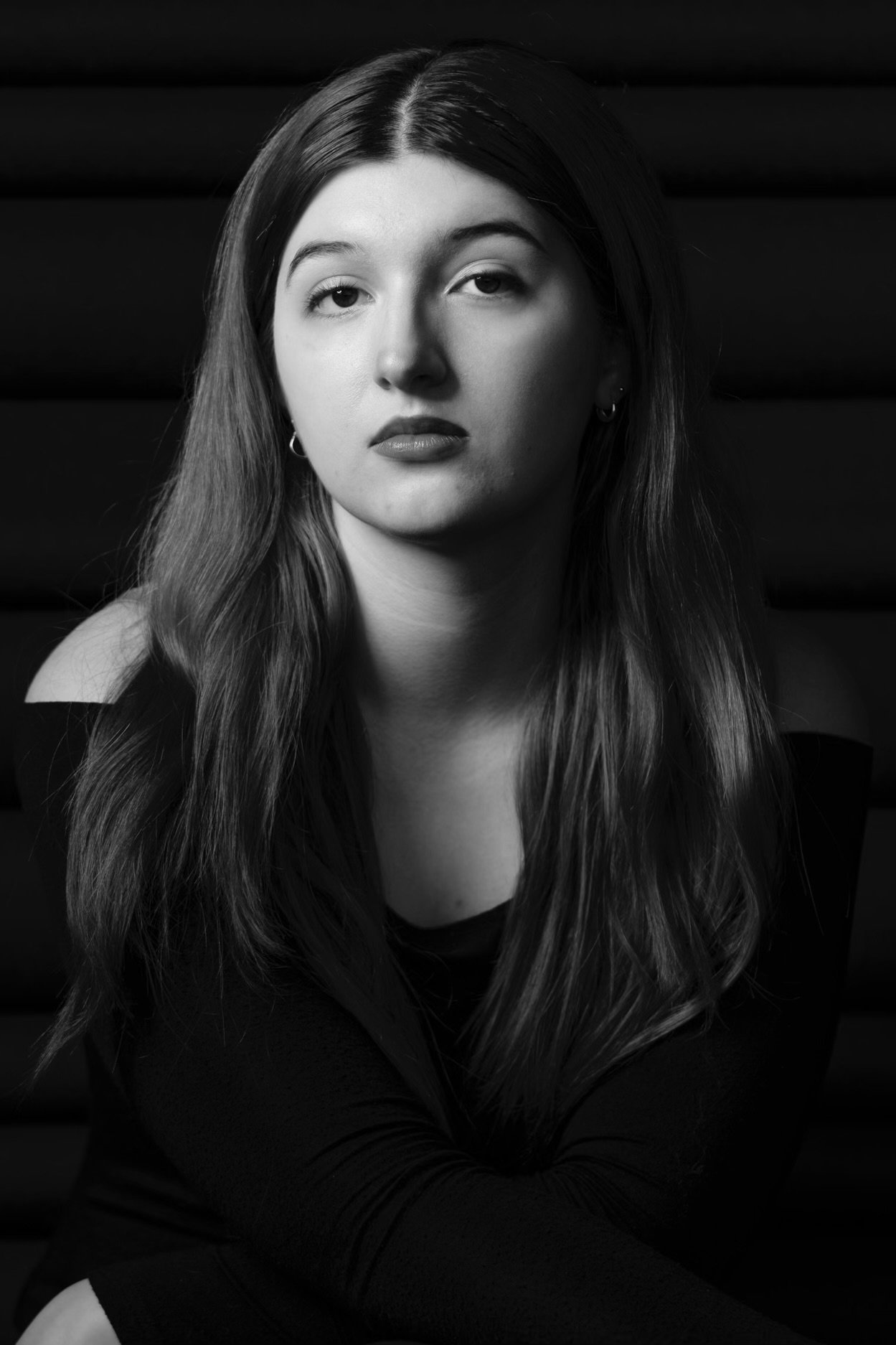
Photo by Zubin Stillings
MADISON MCMAHON graduated from Emerson College with her BA in Writing, Literature, and Publishing. Her work was nominated for “Outstanding Fiction Prose” at the EVVYs, the iconic Emerson award show judged by industry professionals. In her junior year of high school, Madison self-published her fantasy novel, The Son of Mara. In her third and final year of college, her novella, the psychological thriller It’s Not a Big Deal, was published by Wilde Press.
Madison enjoys analyzing literature and teaching literary history to her over 75,000 followers on TikTok and YouTube.

NOVELS

The Son of Mara
By Madison McMahon
A prophecy. A chosen one. A vengeful villain. Everything reads out like the fairytale species that inhabit Esalroth Academy of the Mythical, Magical, and Monstrous. Blythe Seraphin will uncover not every story ends in a happily ever after.
Visit the Shop

It’s Not a Big Deal
By Madison McMahon
When timid film student Emily realizes she has to shoot a commercial for an abusive wilderness therapy camp, she decides that instead of turning them into the police, she will make an exposé-documentary. As she secretly interviews five teenage girls living out their nightmares, Emily begins to question what is the best way to save someone. And when it comes down to it, should you save the one or the many?

VIDEO ESSAYS

The Villainization of Charlotte Brontë
Charlotte Brontë is as famous for “Jane Eyre” as she is for the criticisms thrown at her—but is there any merit to them? This video essay serves to debunk the lies surrounding Charlotte Brontë and her sisters, as well as examining the nuances of a literary history we’ve oversimplified. These thought processes aren’t just plaguing our understanding of the Brontës. No matter what time period you’re in, society will take whatever chance it can to villainize women.
Watch on YouTube

Mary Shelley Literally Wrote Two Frankensteins
Mary Shelley’s “Frankenstein” has long been a staple in pop culture, classrooms, and bookstores…but which version did you read? This video essay compares the drastic differences between the original 1818 “Frankenstein” and the last version Shelley edited in 1831. With interpretative analysis and historical context, let’s try to make sense of Mary Shelley’s many monsters.